Tree Removal in Danville, VA
Danville Tree Care & Removal removes hazardous, dead, and unwanted trees across Danville, Pittsylvania County, and the surrounding Southside and Caswell County area. We handle everything from a small yard tree with open drop space to a multi-stem oak that has to come down over a roof in pieces. Estimates are free. Call (434) 216-5589.
When is removal the right call?
Removal is the answer less often than most people assume. A tree with deadwood over a driveway usually needs pruning, not a stump. A tree with an old lean has probably had that lean for thirty years.
The trees that genuinely need to come down are the ones where the structure has failed or is failing:
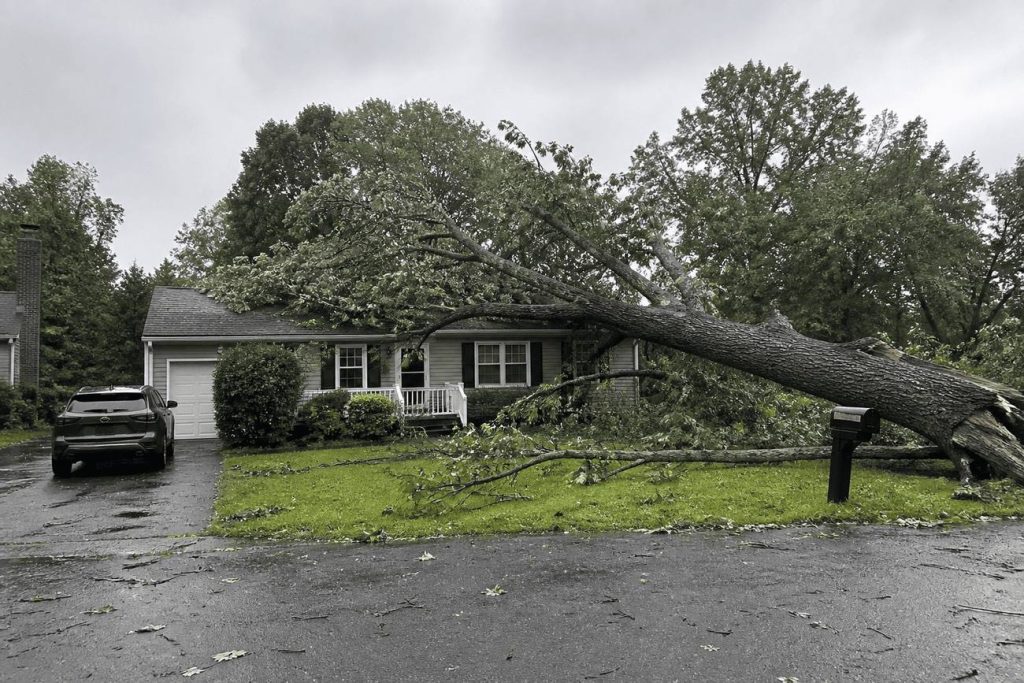
- The root plate is lifting. Cracked or heaved soil on the high side of a lean, especially after a storm, means the anchoring roots have let go. Piedmont red clay holds water, and saturated clay does not hold a root plate.
- Decay has taken the trunk. Shelf fungus or conks at the base, a hollow sound under a mallet, or a cavity you can put an arm into.
- The species is already lost. Ash killed by emerald ash borer. Pines fading yellow-to-red-to-brown from southern pine beetle.
- The location is the problem. A structurally sound tree can still be the wrong tree — too close to a foundation, a septic drain field, or a service line.
How a removal actually goes
We look at it first. Nobody gives a real price on a tree over the phone. We come out, walk the property, check access, and write down exactly what is coming down and what is being hauled.
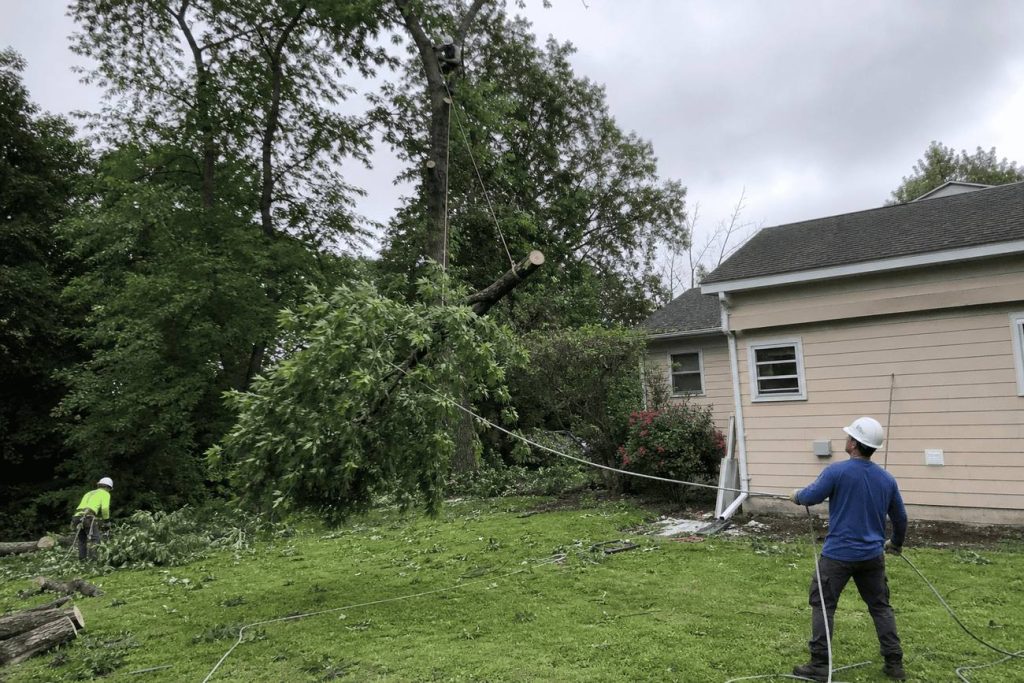
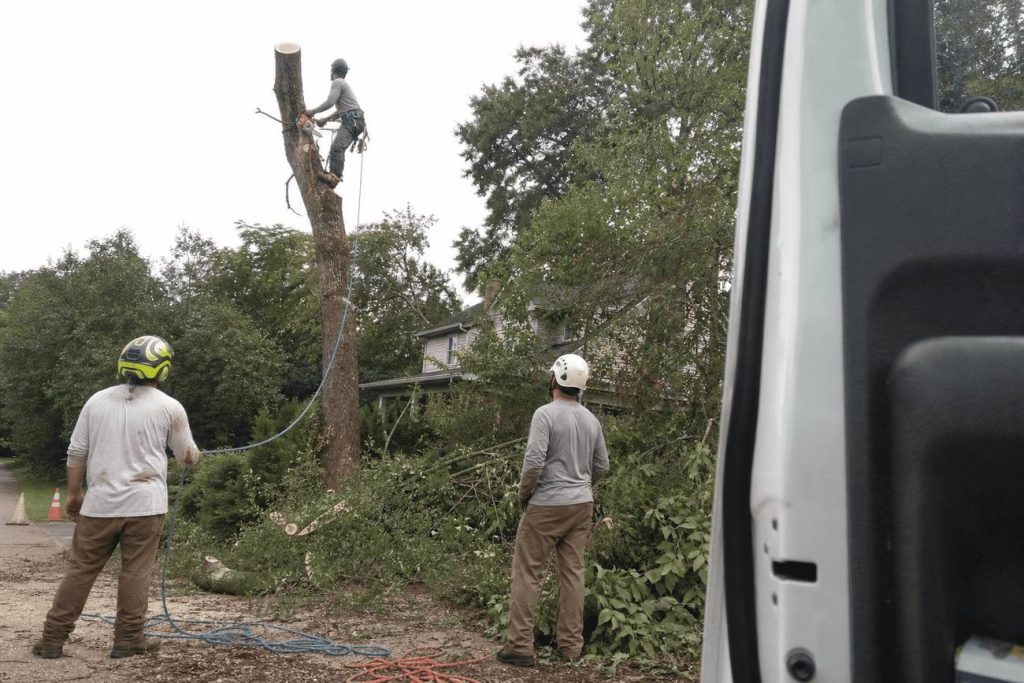
Open drop or technical takedown. If there’s room to fell it, we fell it — fastest and cheapest. If there isn’t, the tree comes down in pieces: a climber or bucket sets rigging, and each section is lowered under control rather than dropped. Technical takedowns cost more because they take longer and carry more risk. Anyone quoting the same price for both is not looking at the same job.
Crane assist where access allows. For big timber over a structure, a crane is often cheaper than rigging it out piece by piece, because it turns a full day into a few hours. Access and setup room decide whether it’s an option.
Cleanup. Wood and brush hauled off unless you want it. Chips blown off hard surfaces. Ruts raked. Tell us up front if you want rounds kept for firewood — it goes on the estimate.
Do you need a permit to remove a tree in Danville?
Not on your own private property. Danville’s code requires approval from the Director of Public Works before anyone plants, removes, or otherwise disturbs a tree or shrub in a public area — Sec. 38.5-24 — with exceptions for utility easement work and emergencies such as windstorms. If your tree stands between the sidewalk and the street, that’s the city’s call, not yours.
Worth knowing in the other direction: if a tree on your property becomes a public nuisance, Sec. 38.5-31 gives the Director authority to send written notice and give you 15 days to correct it, with the city able to recover its costs if you don’t.
We take trees down across Danville and the towns around it — Chatham, Gretna, Blairs and Mount Hermon, Yanceyville, Reidsville and South Boston. What happens to the debris changes town to town, and each of those pages spells out the local rule.
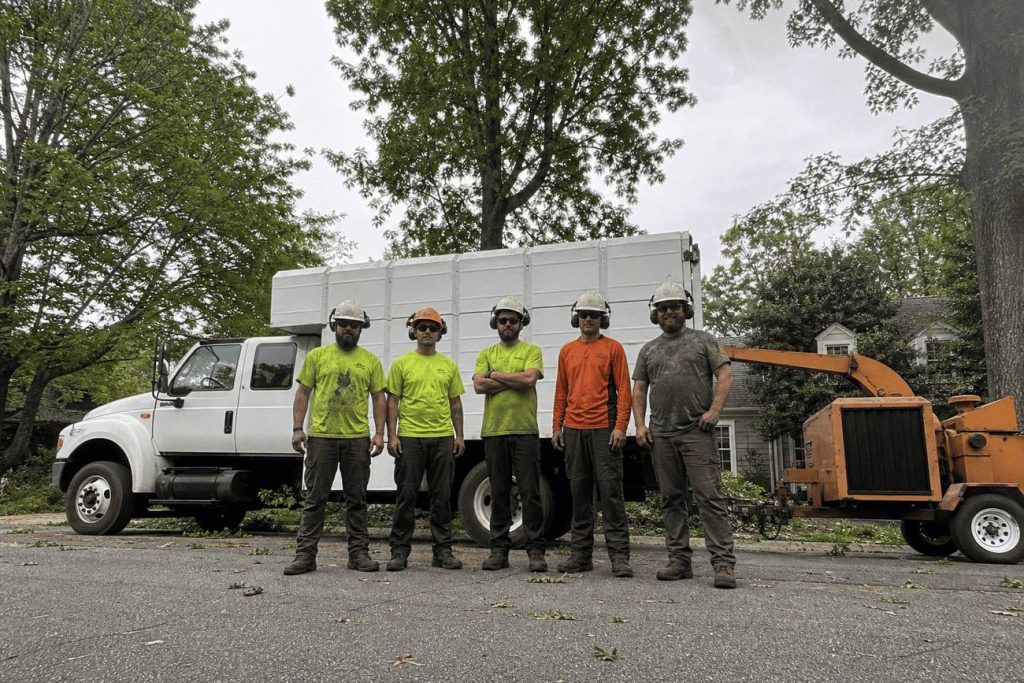
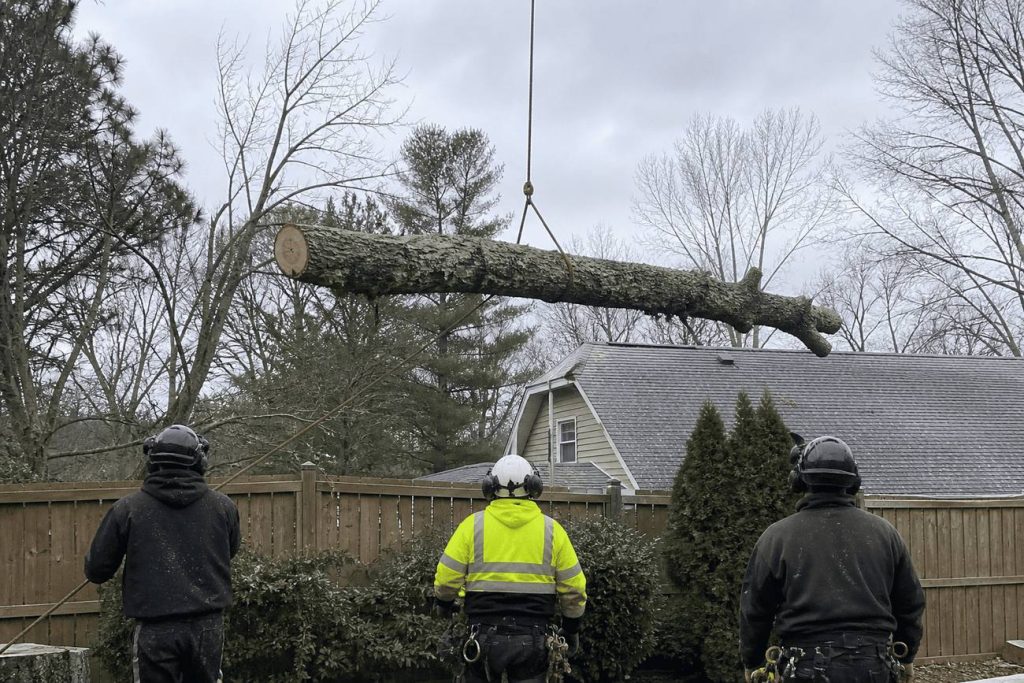
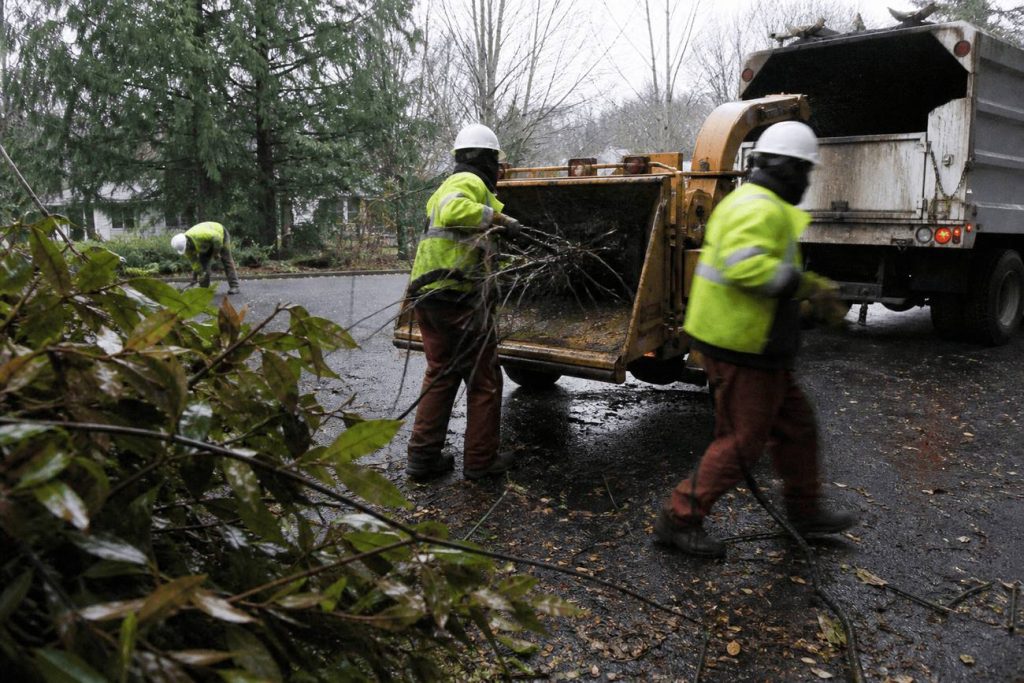
Rigged Down, Not Dropped
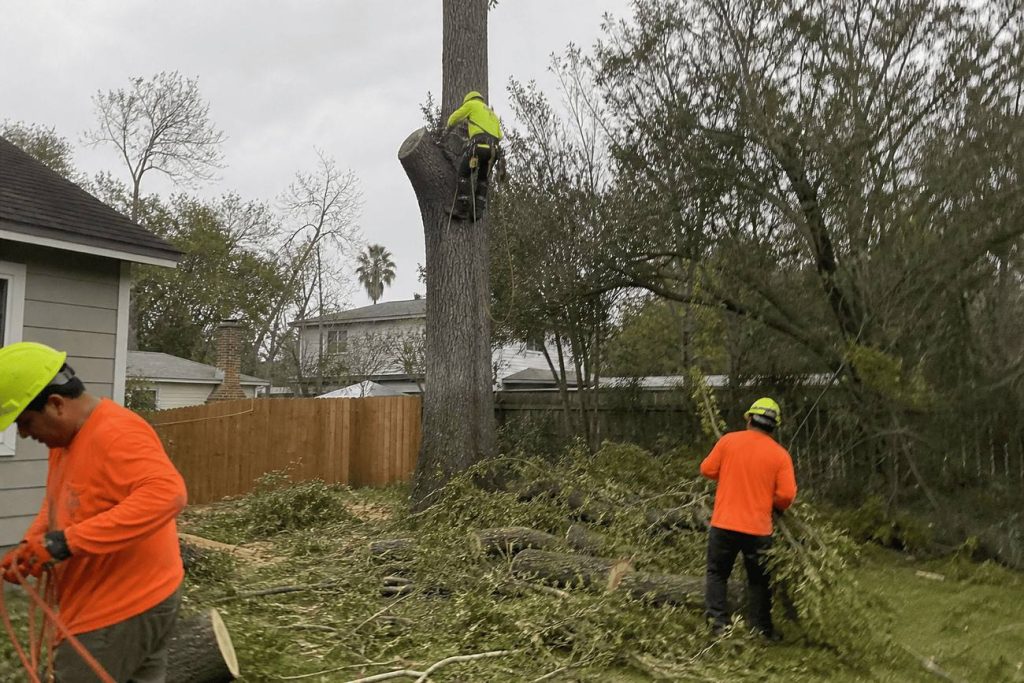
Most of the trees we take out cannot simply be felled. They come down in pieces on ropes, over roofs, fences and service lines, with the stump ground out and the chips hauled off when the tree is gone.
Get a Free Estimate →
What Danville's code actually requires of you
Most of the tree rules a Danville homeowner runs into are not about permission to take a tree down. They are standing duties on a tree you already have, and the city can act on them without asking.
- Limbs over the street or sidewalk have to be at least twelve feet up. City Code §35-14 puts that on the property owner, and it lets the Director of Public Works trim a non-compliant tree and bill the owner for the work.
- You cannot block a driver’s sightline at a corner. §35-14.1 clears vegetation between two and a half feet and ten feet above street grade at intersections. That band is set at eye height, and hedges break it more often than trees do.
- A tree the city calls a public nuisance can be ordered down. §38.5-31 lets the Director order removal and go to court if the owner does not comply in the stated time. In practice this is how a long-dead tree beside a sidewalk turns into an urgent job.
- The tree between the sidewalk and the curb is usually not yours to cut. §38.5-26 makes it an offense to damage, cut, carve, transplant or remove a tree on city land or in a street, sidewalk or alley right-of-way without the Director’s authorization, and §38.5-24 requires approval before planting, removing or disturbing anything in a public area at all. Utility crews working an easement are exempt. A homeowner is not.
If you are not sure which side of the line your tree sits on, ask before the saw comes out. Danville Public Works is (434) 799-5245 and the Engineering Division is (434) 799-5019. Virginia Tech keeps a plain-English abstract of Danville’s tree ordinance if you want to read the sections yourself.
If the tree in question is your neighbor’s, or theirs is leaning at yours, the rule that decides who pays is a Virginia one and it is not the one most people expect. See tree law in Danville.
The city will not haul contractor debris, and it will not take stumps
Danville collects yard waste weekly on your refuse day, and the published limits are specific: nothing longer than four feet, no bundle over two and a half cubic yards, nothing over twelve inches in diameter, and nothing over fifty pounds per bag, box or bundle. Between January 31 and October 1 loose leaves and small debris have to be containerized.
Two lines in that policy decide what a removal actually costs you.
- The city does not service landscapers, tree removal contractors or lot clearing. Debris a crew generates is the crew’s to haul. When a quote comes in cheap and vague about cleanup, this is usually the reason.
- Stumps and rootballs are not collected at all. Not on your refuse day, not ever. A stump is a separate job with a separate machine, and it is the most common thing homeowners assume is included and find out was not.
Get the wood, the brush, the stump and the ruts written into the estimate as four separate lines. Any company willing to do that has thought about it.
Trees near Danville Utilities lines are a different job
Danville runs its own electric utility. That is unusual for a city this size, and it changes who cuts what.
Danville Utilities maintains clearance along its own transmission and distribution corridors under contract, to published standards: fifteen feet from primary conductors at 2.4 to 34.5 kV, or five years of regrowth clearance, whichever is greater; ten feet around neutral wires; five feet around secondary lines; and fifteen feet of clearance above conductors. Their contractor is required on site within fifteen business days of being called out.
What that means for you: if the tree is in the utility’s right-of-way, do not pay anyone to cut it and do not cut it yourself. Call Danville Utilities. If it sits on your side of the line but its limbs reach toward the service drop to your house, that is your tree and your risk, and it is a job for a crew that will not put a saw within ten feet of a live conductor without a plan.
Nobody should be climbing a tree that is touching a power line. That one is not a price question.
Tree Removal FAQs
How much does tree removal cost?
Most removals in this market land between $400 and $3,000. Where you fall in that range comes down to height, trunk diameter, species, lean, what’s underneath the tree, and how close a truck can get to it. A small yard tree with open drop space sits near the bottom. A large oak that has to come down over a roof in pieces, with no truck access, sits at the top — and occasionally past it. We give firm prices after looking at the tree, not guesses over the phone.
Is the stump included?
Only if the estimate says so. Ask us, and ask everyone else bidding. It’s the most common surprise in this trade. See our stump grinding page.
How do I check out a tree company before I hire it?
Three things, and they take about five minutes. One: ask for a certificate of insurance — general liability and workers’ compensation — sent to you directly from the carrier, not forwarded as a PDF. Two: look the company up in Virginia DPOR’s public license lookup. DPOR licenses contractors starting at $1,000, with Class C covering contracts over $1,000 and under $30,000, Class B to just under $150,000, and Class A above that (Va. Code § 54.1-1100). Three: get the scope in writing before anyone starts a saw. Ask us all three. Ask everyone else too.
Call (434) 216-5589 for a free estimate.
Get a Free Estimate
Call and you will talk to somebody local.
Or send us the details and we will come look.
